Quinn
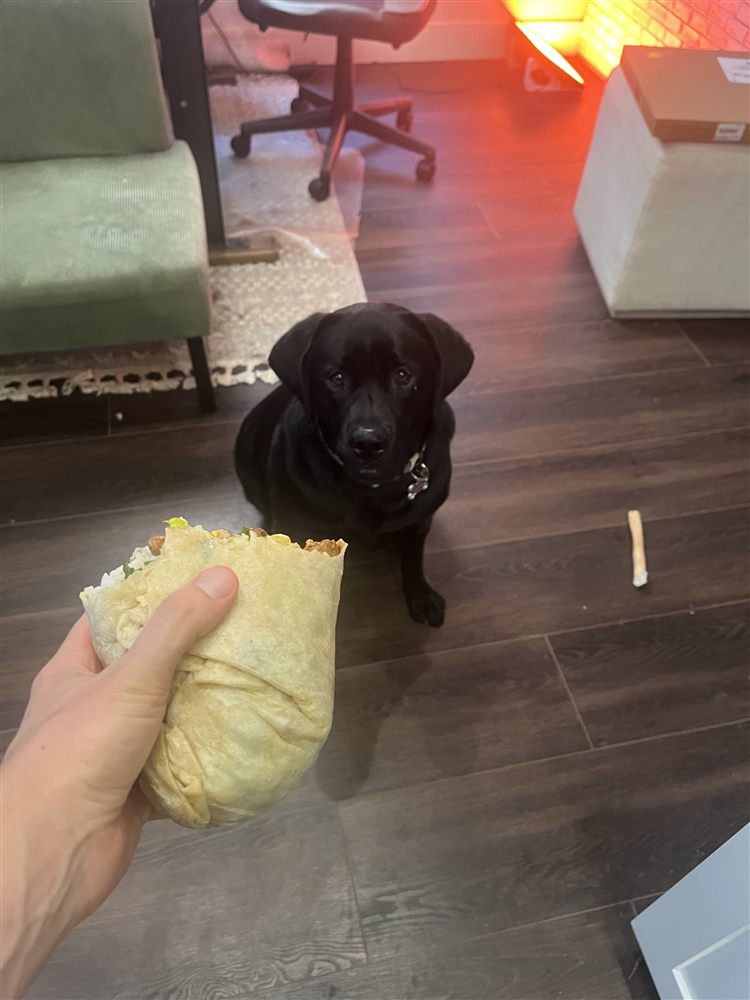
Quinn is a 3-year-old black lab. She loves burritos. Carrying and returning is its own reward for her, often with a soft mouth. The bring-back is a relationship behaviour in its own right. She's built to work with a person: checking in, taking direction, reading you. Biddability is a gift; use it. She winds up fast and can struggle to come back down on her own: the engine revs easily and idles poorly.
Breed instinct, tested against Quinn
What the breed predicts vs. what you actually saw. The tick is the breed's bet; the bar is Quinn.
How Quinn's mind works
A gentle map of how she thinks, learns, and feels — scored by how surely you've read each side.
dimensions
How Quinn feels her way through the day
Carrying and returning is its own reward for her, often with a soft mouth. The bring-back is a relationship behaviour in its own right.
Her nose runs the show. A scent can fully capture her, and when it does, you stop existing for a moment. That's neurology at work. (Breed-suggested; watch for it and confirm.)
Why Quinn does that
Everyday behaviours, translated from dog into meaning.
Retrieve drive
Carrying and returning is its own reward for her, often with a soft mouth. The bring-back is a relationship behaviour in its own right.
Scent drive (likely)
Her nose runs the show. A scent can fully capture her, and when it does, you stop existing for a moment. That's neurology at work. (Breed-suggested; watch for it and confirm.)
Handler-cooperative
She's built to work with a person: checking in, taking direction, reading you. Biddability is a gift; use it.
High arousal, hard off-switch
She winds up fast and can struggle to come back down on her own: the engine revs easily and idles poorly.
Motivated by work
A job satisfies her at a deeper level than treats.
Play / toy-motivated
Toys and play are high-value currency.
Strengthen your bond
Practices shaped to Quinn's exact profile.
Drive Stack
Fetch, carrying tasks, 'hold' and 'give' games: she's primed to cooperate.
Bond Map
Give her structured tasks and clear cues; she thrives on the back-and-forth.
Regulation Profile
Train an explicit off-switch: settle on a mat, calm enrichment, decompression.
Set Quinn up for success
How to help Quinn thrive in the places you actually go.
At home
- Give Quinn a settle spot with a view of you but not the front door, and protect real downtime.
- Build in decompression (a chew, a lick mat, a nap) after busy stretches. Over-tired reads as over-wired.
- Keep a toy handy for a two-minute fetch reset when energy climbs.
On leashed walks
- Structured, sniffy walks beat frantic ones. Reward a loose lead and check-ins.
- Ask for check-ins and small tasks; a job on the walk satisfies more than raw distance.
- Build in a 'go sniff' break. Permission to scent is a reward and it settles the nervous system.
Open spaces (park, river)
- More freedom needs a rock-solid recall. Practice it before the distraction, not during.
- Bring the ball. A retrieve gives Quinn a job and an easy way back to you.
- Expect the nose to take over near water and undergrowth; call before Quinn commits to a scent.
- End on calm, not on 'up' — a frantic finish makes the next outing harder.
Dining out (patio)
- Bring a mat, water, and a long-lasting chew. The goal is 'settle under the table,' not 'be on duty.'
- Walk first to take the edge off; a tired dog settles on a patio, a fresh one scans.
In the car
- Secure Quinn with a crash-tested harness or crate. Loose dogs escalate and aren't safe.
- A chew for the ride and a calm exit routine keep arrivals from starting at a ten.
Grounded in your observations, not guesswork
Breed instinct seeds a hypothesis; Quinn's actual behaviour, as you observe it, is the truth that overrides it. Pawfile states how sure it is per dimension. It describes behaviour and never replaces hands-on care: sudden changes point you to a vet, and aggression or severe anxiety to a behaviourist.